Hobby of the Month
Welcome to our Hobby of the Month section—our dedicated space for exploring the rich histories, subcultures, and communities behind Australia’s most beloved pastimes. Each month, we peel back the layers of a different featured monthly collectible, moving beyond the surface to understand what drives enthusiasts. Whether you are a lifelong veteran or just looking for your next passion, join us as we archive the stories that turn simple objects into storied collections.
Sports Balls
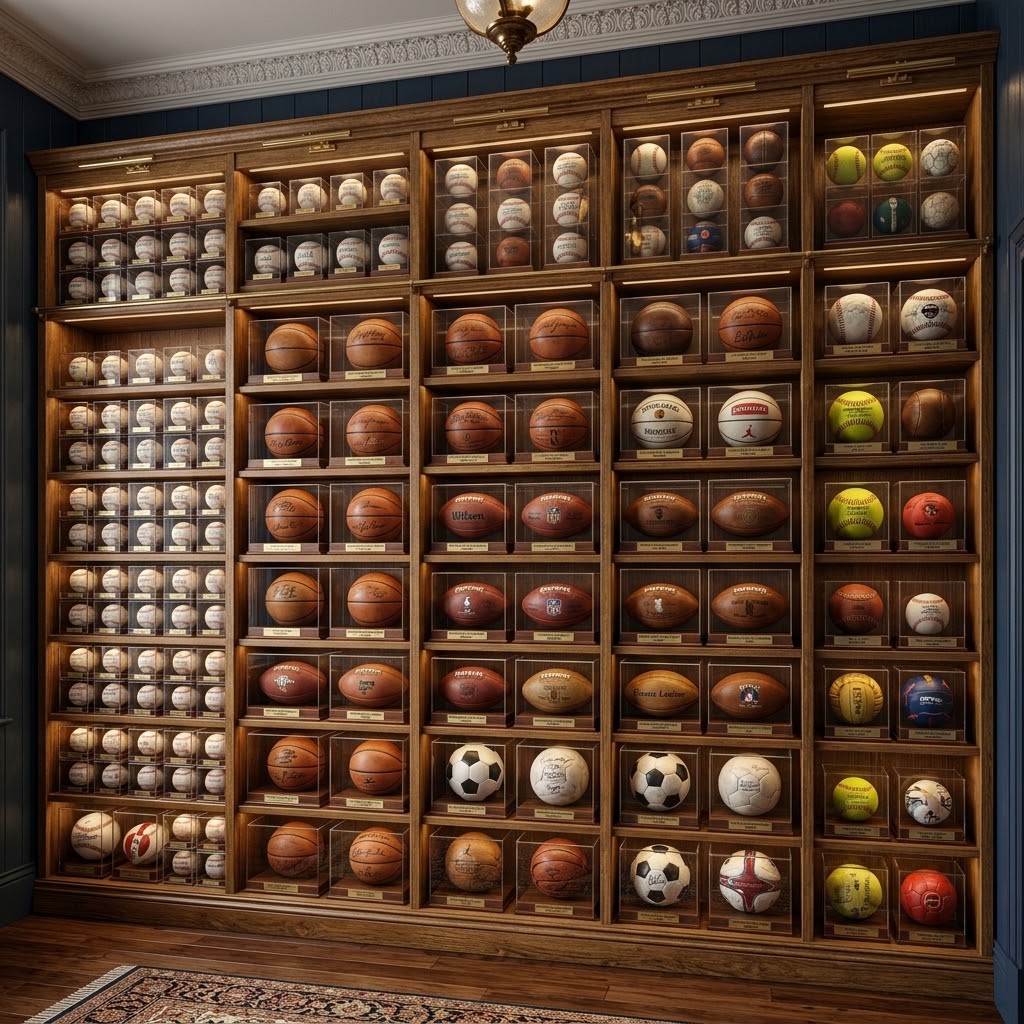
The story of collecting sports balls begins not in display cases, but in the hands of the craftspeople who bind raw leather to string, bladders, and cork. Whether it is an eighty-eight-inch seam of waxed red thread pulling together two figure-eight pieces of cowhide for a baseball, or the hand-laced panels of an Australian Sherrin, a vintage English Gilbert, or an eight-panel basketball, every ball starts as a masterclass in functional tactile engineering. While millions are kicked, pitched, and dribbled until the pebble wears smooth and the leather scuffs to dust, dedicated ball collectors see something else entirely: a sculptured convergence of human craft and physical history. Over generations, the impulse to keep a ball transitioned from casual childhood souvenir hunting to a deep appreciation for the artisans who shaped them, the unique grain of historic tanneries, and the enduring romance of a simple sphere built to be thrown.
As personal appreciation formalized, collectors developed an eye for the physical nuances that separate a true instrument of the game from an everyday knockoff. The criteria is purely visceral and grounded in genuine craft: the thickness and smell of authentic full-grain Horween leather, the tension and raised profile of hand-pulled stitches that give pitchers their grip, and the distinctive league factory stamps certifying exact match weight and circumference. Enthusiasts care about the heritage of the makers—the generational leather-cutters at Rawlings, the stitchers of Melbourne, or the legacy workshops that hand-stitched rugby balls long before synthetic polymers took over the modern pitch. Scarcity in this space is organic rather than artificial: it is the survival of a century-old, dark-lacquered ball, an obsolete twelve-piece leather panel design, or the distinct signature touch of a long-retired master stitcher preserved on a mantle.
At its core, ball collecting is defined entirely by emotional resonance and tactile connection. A ball earns its spot in a collection because of who held it, where it soared, or how it feels resting in the palm of a hand. One collector treasures a scuffed, grass-stained leather sphere simply because it crossed a boundary rope during a historic final; another cherishes an unplayed, pristine deadstock ball purely to admire the golden-brown patina and the rhythmic geometry of its stitching. Devoid of arbitrary grades, market bubbles, or commodified plastic enclosures, the collection remains an honest, hands-on tribute to the game. It is the ultimate everyday artifact—an authentic, tactile link between the person who made it, the athlete who hurled it, and the fan who refused to let the moment fade. (1, 2, 3, 4, 5, 6, 7)

The Archive
Our hobby of the month changes, but the passion remains. Here is a quick look back at our most recent deep dives—a small sample of the diverse world we explore here at The Collectible Chronicles.
Barbie Dolls (Sep)
Debuting in 1959 as an aspirational fashion doll, Barbie revolutionized the toy industry before evolving into a mature adult collecting movement by the late 1980s. Over the decades, Mattel embraced this community by introducing lavish designer collaborations, porcelain-like Silkstone lines, and color-coded production tiers that fuelled dedicated fan circles focused on styling, diorama photography, and preservation. Today, Barbie collecting stands apart from speculative modern hobbies as a relaxed, passion-driven pursuit, where the vast majority of releases remain affordable and significant four-figure valuations are strictly reserved for pristine 1959 originals and scarce vintage rarities.
Sports Cards (Aug)
Emerging in the late nineteenth century as simple promotional items inside tobacco and gum packaging, sports cards brought the excitement of the game straight to passionate fans. Over the years, the medium developed significantly—standardizing card formats and player stats before advancing to modern innovations like refractive foils, embedded memorabilia swatches, and certified acrylic grading slabs—while expanding from schoolyard trades into sophisticated global digital marketplaces. Today, sports card collecting thrives as an international hobby, with the Australian community displaying a dedicated split between domestic roots in AFL and NRL releases and high-end pursuits across major leagues like the NBA and European football.
The Beauties Gallery
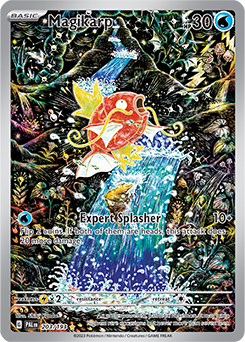
Rendered with raw, frenetic brushwork by illustrator Shinji Kanda, the Paldea Evolved Magikarp Illustration Rare redefines one of the franchise’s most mocked icons into a mythic spectacle. Rather than depicting a hapless, flopping fish, Kanda pulls straight from the Chinese legend of the Dragon Gate, thrusting Magikarp into an apocalyptic, woodblock-inspired cataract. Crashing waves, jagged line art, and an overwhelming deluge of cobalt and emerald hues evoke the kinetic fury of classic Japanese scroll painting and ukiyo-e. By stripping away standard cartoon polish in favour of visceral, tactile mark-making, Kanda captures the desperate, primal ascent of a creature destined to become a sea dragon in a single, mesmerizing frame. (1).
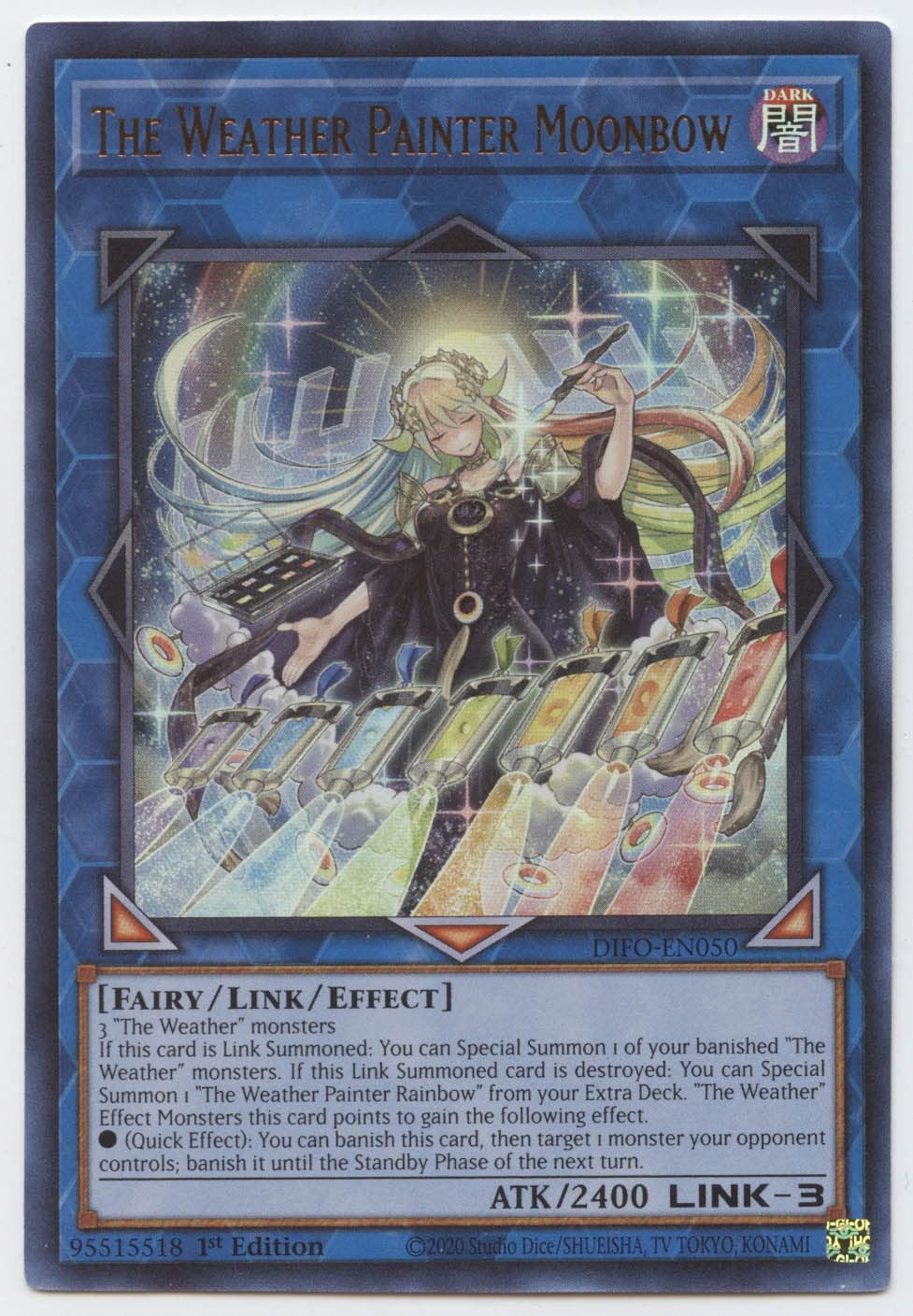
Illustrated with signature ethereal elegance, The Weather Painter Moonbow serves as the dazzling apex monster of the “Weather” archetype in the Yu-Gi-Oh! Trading Card Game. The card’s artwork captures the celestial painter mid-flight against a nocturnal sky, weaving luminous lunar hues and prismatic pigments with effortless, dreamlike grace. Armed with game-bending banishment disruption and the ability to banish herself to summon banished archetype comrades, Moonbow seamlessly embodies both the elusive, tactical mastery and the delicate fairy aesthetic that define her meteorological theme. (2).
TCC’s Collection
Our journey doesn’t stop here. Explore the other corners of our digital library where we dive deep into the specific worlds of Pokémon, AFL, and more.